sheddweller said..Rango said..quobbafins.com/pages/technologyWas the twisted fin theory meant to reduce drag, if so these guys say the tip makes little difference , its all in the base.
So, there is a lot of turbulence and drag at the base of the fin? This then is a distinct argument in favour of getting the AOA of the base of the fin correct, so as to minimise the drag.
The twisted fin is then the refinement of the system with toe-in being of primary benefit.
So in fact I would say that your link supports the twisted toe'd in theory not disproves.
Nope. It doesn't support that at all.
this notion that at 2.1deg or whatever angle, some magic occurs, is ridiculous. I posted the study earlier that showed the angle of attack on the fins swings suddenly + or - 45degrees at the board surface because the water is constantly moving and the board is constantly turning.. That aside, most typical fin foils are comfortable up to 20degrees so 0.1 of a degree will have minimal effect.
The quobba fins study is in reference to the drag that occurs at the fin connection to the board. drag due to the wildly swinging AOA would also be at play. There has also been testing between glass on fins and boxed fins. Glass on fins have fillets which reduce drag where as box fins don't have fillets. Quobba fins have fillets shaped into the fin base. Same reason why some of the delta weed fin makers use fillets on their fins and why planes wings have fillets.
the study into surfboard fins demonstrated the drag difference was low. Off the top of my head 3% or something. Probably not worth worrying about but definitely there. it's addressing drag due to the connection.
toein on fins adds drag. That's the reality of how this works. you guys can argue against that all you want but unfortunately that's how it works. Using asymmetric fins is trying to overcome the drag created by toeing the fins in the first place.
however, toeing fins does improve turning and that's why it's done. A fin has a lift component at 90deg to the meanline of the foil. When the fin is parallel to the board, the lift component is 90deg and holds the board in the wave. By toeing in the fin, it rotates the lift in a direction more towards the nose of the board and that is what makes the board turn better.additionally, by moving the front toed fin more towards the rail and away from the centre fin we increase the pivot. Not sure if fulcrum is the right term. Anyways this is why the relationship of all fins is important. have you noticed wider tails suit multi fin setups.
all of that is not my opinion. I am repeating the findings of many studies into fin design and orientation which are available online. Show me information that counters that and It will change my understanding and from that my opinion.



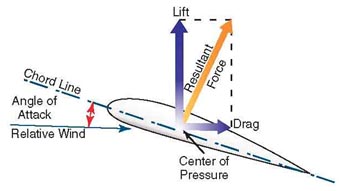
 bandung-aeromodeling.com/tutorials/aerodynamic_forces-03.jpg' />