john24 said..
I think those ocean racer rigs are Solent rigs, they don't fly both foresails together, it's just a convenience to have two different jibs ready to go.
Hi John,
Respectfully disagree, as Sands' pic shows. For it to be efficient and workable though, the luffs all need to align and have equal spacing, which means your halyard positions on the mast need to have separation between them. This is not that common.
My mast halyard position for the staysail is 2m lower than my genoa halyard. This matches the tacks, which are also 2m apart. The good designs use masthead kites and a fractional genoa, so they can have three luffs all beautifully matched, This is why I cannot use three headsails for reaching or running, my rig is fractional and not a mast head, so my kite halyard has no separation to the genoa.
To trim them correctly you match the line of the leaches, this is hard to do with the heads of the sails all going to the same spot.
I would argue without clear and uniform separation, normally an issue at the mast, you are not going to get real benefit from two headsails, but with the right design and trim it is more powerful and slightly quicker. And the bigger sail gets settled, it heels less and handles the gusts better hence you can carry it longer.
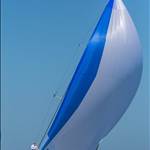
An example, the last race we were two sail reaching with the spinnaker and the staysail, and we had less broaches as compared to not using the staysail.
So we had more sail area, more control and more power in the lulls. Win win.
Cheers!
SB