

quote:
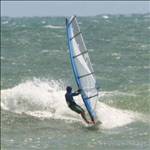
Jumping big floating sausages looks like FUN

quote:
Originally posted by Boris
if
(
you use code format to post in a windsurfing forum,
you are a geek
else
there is no 'else'. You are simply a geek
)
quote:
F. Deadly Joke
Q. What is the funniest joke in the world? What does it mean?
A. Wenn ist das Nunstuck git und Slotermeyer? Ja! Beiherhund das Oder die Flipperwaldt gersput!
[Taken from “The First 200 Years of Monty Python” by Kim “Howard” Johnson]: “It was actually German gibberish,” Eric Idle explains. “It’s written-down gibberish, because we all had to learn the same thing, yeah, but it’s gibberish! It doesn’t mean a thing at all. At least, I don’t think it does…”
Q. Isn’t some of that actual German? What’s the closet translation into English you can make?
A. Yes, some of the words used were real German words. Others were pseudo German-sounding words. It’s mostly nonsense.
[Taken from an article to a.f.m-p by Dirk Rehberger]: I’ve seen it, I’m German, and here’s the translation.
Wenn ist das – If is the (note: “Wann”means “when,” which would make slightly more sense, since it’s a question)
Nunstueck – nun = now, stueck = piece
git – that’s obviously English! (but similar to “gibt” meaning “gives” or, in the phrase “es gibt,” “there is”)
und – and
Slotermeyer? – Doesn’t make sense! (Meyer is a common German surname)
Ja! – Yes!
Beiherhund – hund = dog. Beiher doesn’t make any sense. Bayer mean Bavarian, but you can’t say “Bayerhund” for “Bavarian dog;” you would have to say “Bayrischer hund.”
das oder die – the or the (das is neuter, die is feminine) or that
Flipperwaldt – Flipper = pinball, wald = wood/forest
Gersput – Doesn’t make sense! “Ge” and “ver” are very common German prefixes for past participles, but not “ger.”
All in all: If is the now-piece (git) and (Slotermeyer)? Yes! (Beiher)dog that or the pinball wood (gersput)!
Note that your translation may vary, depending on which transcription you use and how hard you try to make sense of it.